



Ask most parents why they sign their kids up for sport, and the answer is likely the same: to get them moving and burn off some energy. But anyone who’s spent a Saturday morning on the sidelines knows sport offers so much more than physical fitness.
According to Sport NZ, just 57% of Kiwi kids aged 5 to 17 get the recommended seven hours of physical activity a week1.
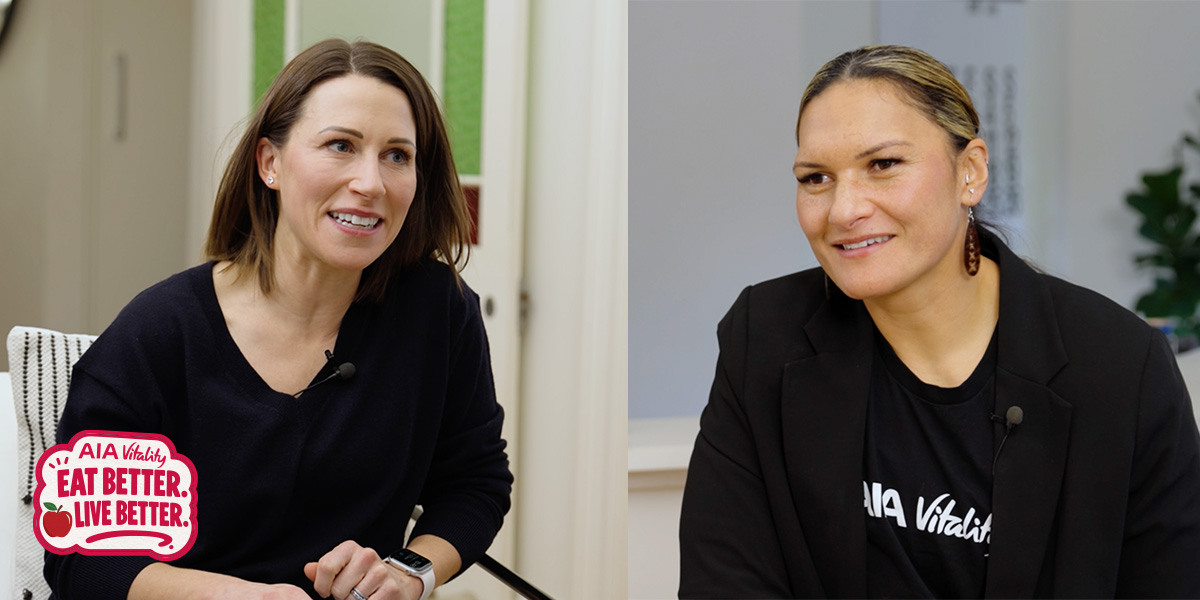
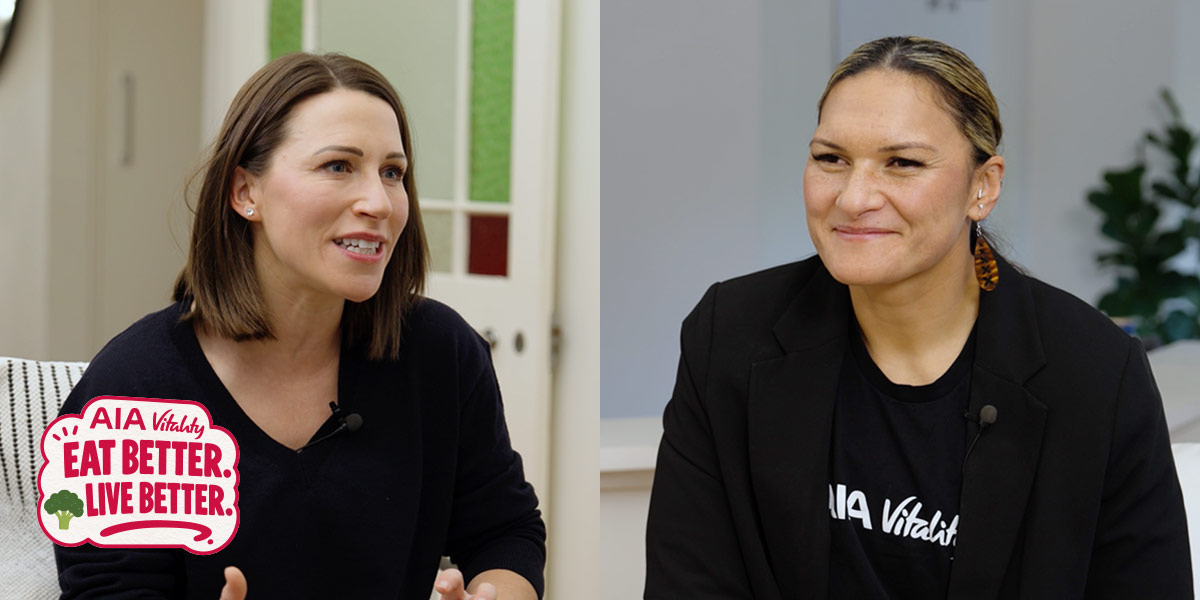
As part of AIA’s Healthiest Schools programme, AIA Vitality Ambassador and mum of two, Dame Valerie Adams sat down Kim Harvey, founder of the Young & Healthy Charitable Trust, and health psychologist, Laura McAlpine to explore why getting active from an early age matters.
Together, they share how sport helps kids build lifelong healthy habits, positive relationships, and skills that go well beyond the playing field, plus how parents and teachers can encourage them along the way.
It starts early
Kim has spent 25 years helping Kiwi families build healthy habits, and she points to New Zealand research showing that kids who enjoy active play growing up are more likely to stay active as teenagers2. It’s a big part of why she founded the Young & Healthy Charitable Trust, and why she believes in programmes like AIA Healthiest Schools that reach kids in their first years at school.
“Once you’re an adult, those habits are really hard to change. So the best time to get it right is when they’re little,” says Kim.
The good news is that at that age, kids don’t overthink it. “If it’s fun and they’re enjoying it, they’re just going to get in and do it,” says Kim.
So, what is being involved in sport teaching them?
For Laura, sport is a wonderful place for kids to pick up skills that will stand them in good stead through childhood, the often turbulent teenage years and into adulthood. First up is resilience.
“With sport, you get so many chances to practice making mistakes in a safe environment. Encourage your kids to learn from them, come back and try again, and see that they can overcome those little hurdles,” Laura says. “That really builds resilience.”
Sport also creates opportunities for kids to build friendships and connect with teammates from different backgrounds. Laura has seen this firsthand, with her daughter joining a volleyball team for the first time this year, alongside girls from Kiribati, Tongan and Samoan backgrounds.
“It’s been a wonderful opportunity for her to form new friendships and connect with such a wonderful group of people she might not otherwise have met,” says Laura.
Then there’s teamwork. “You’re part of something bigger than you, and you’re all working towards shared goals,” Laura explains. “Everyone has a part to play, there’s a lot of give and take, and you have to problem solve together.”
A healthy outlet for stress
Much of Laura’s work as a psychologist is helping adults regulate their nervous systems and cope with pressure. According to Laura, kids who play sport are able to start picking up those good habits from a young age.
“Exercise helps burn off excess energy and some of the anxiety that comes with day-to-day life,” says Laura.
Kim says it doesn’t have to be a long training or even a formal game.
“If you’re driving and spot a playground, stop and spend a few minutes there. Find something to push, like a playground carousel or a swing. The action of pushing is great for working off energy and anxiety,” says Kim.
“And that goes for parents as well as kids. Then it’s back in the car and off you go.”
The benefits also extend to the classroom.
“If you’re stressed and dysregulated, it’s hard to concentrate,” says Laura, who points to research carried out in Australia, which followed more than 4,000 children and found that those who stuck with sport through their school years tended to do better academically.
Somewhere to belong
“Sport was my favourite subject at school,” says Dame Valerie. “It was where I felt comfortable. It was a bit of a coping mechanism for me. Being so tall, I felt like I really belonged when I was playing sport.”
Dame Valerie believes this will ring true for a lot of kids, who may find in sport a place where they feel they belong.
Learning to lose well
Of course, sport comes with losses as well as wins. Laura asked Dame Valerie, who has performed and won gold on some of the world’s biggest stages, what her losses have taught her.
“It’s sport. You win some and you lose some,” says Dame Valerie.
“When it happens to a child, it’s important to acknowledge it, rather than brush past it. Telling kids they could have or should have won is not helping them. Instead, it’s about letting them know they just weren’t the best on that day, and that’s okay. Then you work out what to focus on next time,” she says.
She speaks from experience. Dame Valerie’s silver medal at the 2016 Rio de Janeiro Summer Olympic Games was a loss in many people’s eyes, including her own in that moment.
“But looking back, that was the best I could give on the day,” she says.
It’s the same at home. Dame Valerie’s son plays basketball and, as she puts it, most of the time his team loses. “It’s about acknowledging the loss but encouraging them to carry on.”
Dame Valerie also doesn’t buy into making sport all about turning up.
“We’re not helping our kids build resilience if we’re forever saying it’s all about participation,” she says. “Sport can be tough, and we all know that.” Laura agrees that it’s reality and it’s what happens for the rest of life too.
So, what can parents do? “You’ve got to praise the effort,” says Dame Valerie. “Good job out there. We lost this one, but let’s work harder for next week’s game.”
Lessons that last
Signing kids up to play sport might start as a way to burn off energy, but as Dame Valerie Laura and Kim have shared, it’s also where kids learn to make mistakes, be part of a team, manage anxiety and form wonderful relationships.
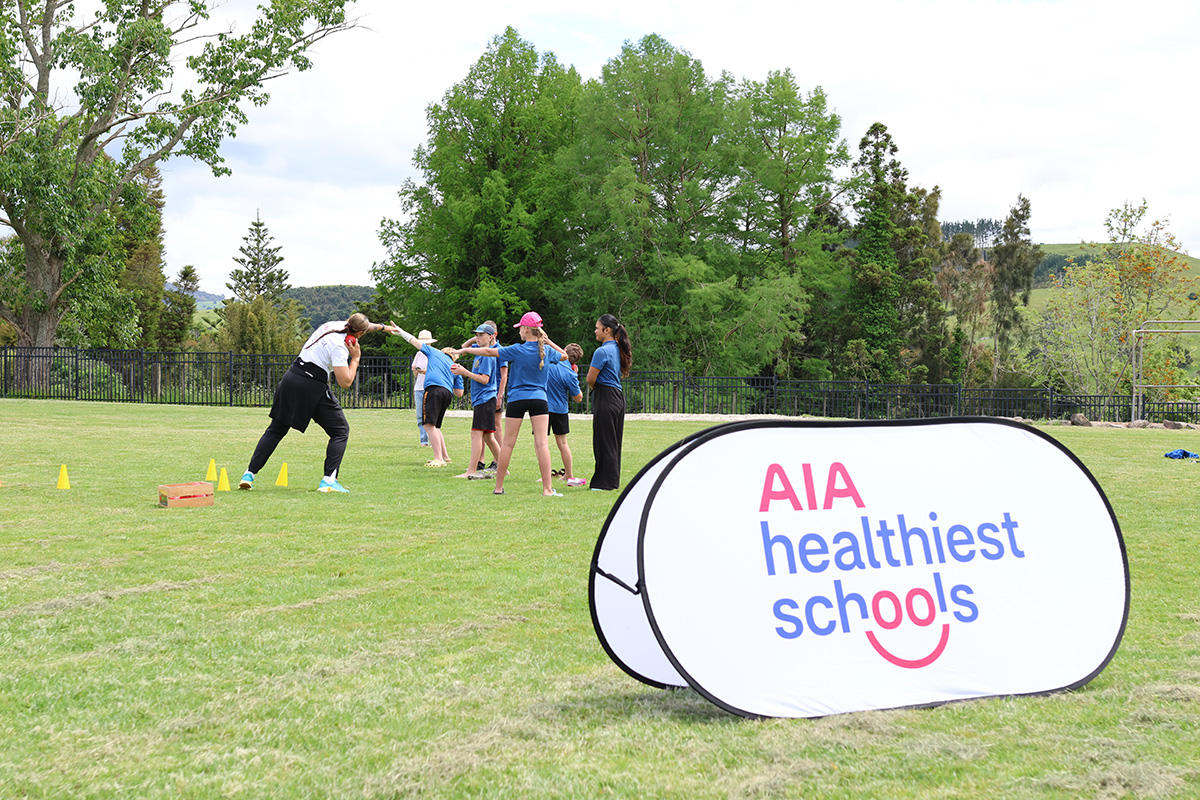
Helping kids build these foundations early is what AIA Healthiest Schools programme all about. The programme gives primary school teachers free, curriculum-aligned resources for years 1 to 6 that inspire healthy habits in four key areas: active lifestyles, healthy eating, mental wellbeing and environmental sustainability.
Lessons come with teacher guides, bite-sized activities, worksheets, posters and videos from AIA Vitality Ambassadors, including Dame Valerie herself, so the conversations that start on the sideline can carry on in the classroom.
Visit here to learn more.
Do you know a school running a great wellbeing initiative?

They could win $40,000 through the AIA Healthiest Schools competition!
They just have to answer 4 simple questions and tell us about the difference they're making for their students.
It's free to enter and open to NZ Primary Schools.
Footnotes:
- Sport New Zealand Ihi Aotearoa (2025). Active NZ: Annual report on the 2024/25 New Zealand participation survey. https://sportnz.org.nz/resources/active-nz-survey-202425/
- Richards R, et al. Childhood and contemporaneous correlates of adolescent physical activity. Dunedin Multidisciplinary Health and Development Study, University of Otago. https://pmc.ncbi.nlm.nih.gov/articles/PMC2728043