


Every parent wants to raise healthy, happy kids. But between busy mornings, packing lunchboxes, after-school activities, weekend sport and everything else family life throws your way, getting nutritious food onto the table isn't always as easy as it sounds.
It's a challenge shared by families across Aotearoa. In fact, according to the Ministry of Health, fewer than one in 10 Kiwi children are eating the recommended number of vegetable servings each day.*
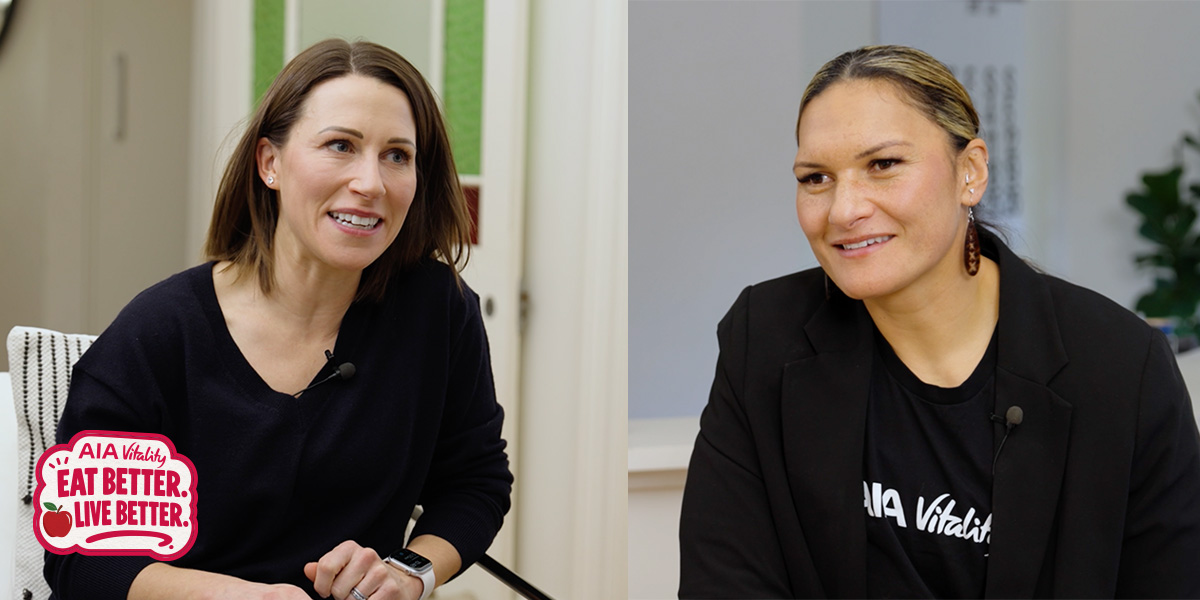
As one of Aotearoa’s most celebrated athletes and a mum of two, AIA Vitality Ambassador Dame Valerie Adams understands the balancing act all too well. Dame Valerie sat down with nutritionist and author, Claire Turnbull, from Mission Nutrition, to talk about her experience feeding growing kids, bust common nutrition myths and share practical, realistic tips that can help make healthy eating a little easier for families.
Forget perfect. Start small
“I know I should be feeding my kids well, but some days it just doesn't happen. Where do busy parents even start?" is a question on Dame Valerie’s and many other Kiwi parents’ minds. However, Claire reminds us that it’s all about doing the best you can with the resources you have.
"It’s about trying to keep it as simple as you possibly can, with many small steps," says Claire. “Rather than trying to transform the way your family eats overnight, the focus should be on finding small, manageable changes that are realistic to maintain and, over time, turn into healthy habits.”
According to Claire, this can be anything from including a piece of fruit in your child’s lunchbox, offering vegetables only to snack on if your making dinner and your kids are asking for something to eat. Getting kids involved in cooking or growing food where possible is also a great way to build their interest in what they are eating and where it comes from.
Rather than trying to achieve a ‘perfect’ diet for your kids, Claire suggests starting with small steps which will hopefully develop into a lifestyle that your little ones will carry with them for life.
Your food habits shape theirs
Claire shares that how children eat is largely shaped by what they can see. "How we eat is influencing them subconsciously," says Claire.
“The way parents talk about food, how they approach mealtimes, and how they make their own choices, all have an impact on how children think about food and the eating habits they build.”
Dame Valerie particularly resonated with this. As a mum of two with a son who has Type 1 diabetes and a daughter who is not a fan of eating fruit and vegetables, she reflects on the way her two kids eat. “ I have to be an example with what I eat, and make sure they see that,” she shares.
The language parents use when talking about food also has an effect. Labelling foods as "good" or "bad" can create unhelpful associations for children.
"Food has no moral value," Claire explains. "There's just food that we ideally want to be having a lot more of and more often. And then other foods that are treats to be enjoyed sometimes.”
Why your food environment matters more than you think
According to Claire, the food environment you create at home can have a profound impact on your child’s eating habits.
As humans, we are more likely to eat what is easy to access, so something like placing fresh fruit and vegetables in a nice bowl on the kitchen bench where it is easily noticeable, goes a long way.
Claire recommends keeping sweet treats out of sight in non-transparent containers up on high shelves, so kids can still enjoy them sometimes but they aren’t a key focus.
“Another tip is to chop vegetables, like carrots, in advance and place them at the front of the fridge where they are easy to grab when kids get peckish. These small changes to your kitchen environment will help make the healthy choice become the easy choice. “
Debunking common food myths
There is a lot of noise online on the best way to feed your children, foods that are must-haves and ones to avoid. Claire says to be careful with what you believe when it comes to these online nutrition tips.
For example, contrary to common belief, most frozen vegetables are just as nutritious as fresh vegetables.
"A lot of frozen veggies are actually snap frozen as soon as they are picked, so there are a lot of nutrients in them," says Claire. “Frozen fruit and vegetables are also a great way to make meals go further and sneak goodness into kids’ meals such as fried rice or a smoothie.”
Claire reiterates that breakfast is an important meal of the day for kids. While adults have a little more flexibility with when they eat in the morning, children hugely benefit from starting their day with a balanced meal such as porridge, eggs on toast, or yoghurt with fruit and wholegrain cereal. “It sets them up physically and mentally for everything the school day throws at them”.
Another common myth is to avoid eating fruit because it is high in sugar. Claire says kids eating fruit is not something parents need to worry about limiting.
“Eating whole fruit such as an apple with the skin on has many nutritional benefits for kids, including fibre that is vital for a healthy diet,” says Claire.
Food for thought
Claire says it is also important to remember that every child is different, and what works for one may not work for another, and that is completely normal.
“There is no single ‘right’ way when it comes to feeding children well,” she says. “The best thing you can do as a parent is to remember healthy eating doesn’t have to be perfect, even on the days when dinner is eggs on toast, and the lunchbox isn't Instagram-worthy.”
Eating well should be accessible to every Kiwi family and healthier eating just got more rewarding with AIA Vitality. AIA Vitality members get access to the AIA Vitality HealthyFood Benefit, which offers up to 25% off fresh fruit and vegetables at Woolworths. Visit here to learn more.

Save up to 25% on fresh fruit & veg every month*
Making healthy choices is more rewarding with AIA Vitality

- Buy any eligible insurance, add AIA Vitality and activate in the AIA Vitality app
- Link your Everyday Rewards Card in the AIA Vitality app
- Save 10% off when you activate the AIA Vitality HealthyFood benefit in the app
- Boost your discount to 25% when you complete your AIA Vitality Health Check and save up to $15/month, per member
*Discount applies to up to $60 of eligible spend per calendar month. T&C's apply.
Footnotes:
- To find out more about AIA Vitality partner, Mission Nutrition, who offer personalised nutrition advice, visit missionnutrition.co.nz
- * Annual Update of Key Results 2024/25: New Zealand Health Survey